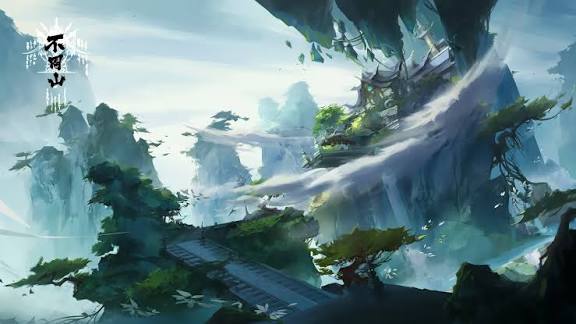
From ruthless villains who defy heaven to determined heroes who rise from obscurity, light novels often capture the boundless imagination of readers through their vast worlds of cultivation, magic, and martial arts. Each story presents a unique journey—whether it’s mastering forbidden techniques, uncovering universal truths, or reshaping entire civilizations through sheer will. Below are ten detailed synopses of some of the most compelling tales, where destiny is challenged, power is pursued, and legends are born.
1. Mage Adam
Adam is not like ordinary mages. While others are driven by emotions, ambition, or power-lust, Adam’s mind is a cold machine of reason. With logic as his guiding principle, he enters the world of magic not to dominate but to understand. His every spell is an experiment, every battle a test case, every theory a stepping stone toward ultimate truth.
But in a realm where passion fuels strength and empathy forges alliances, Adam’s detached pursuit of knowledge sets him apart. As he explores forbidden theories and constructs groundbreaking magical systems, he clashes with both tradition and powerful enemies. Will his emotionless pursuit of logic lead to enlightenment—or turn him into something less than human?
—
2. Great Dao Commander
Born in an era of chaos, the protagonist takes his first steps on the cultivation path amidst warring sects and collapsing empires. With unrivaled determination and an unshakable comprehension of the Dao, he gradually becomes a commander not of armies, but of the Great Dao itself.
Through trials of blood and spirit, he wrestles with the eternal truths of existence—balance, destruction, creation, and unity. His name strikes fear into those who defy him and reverence in those who follow. Yet the higher he climbs, the clearer it becomes that true command over the Dao means more than victory in battle: it means rewriting the destiny of heaven and earth.
—
3. Warlock of the Magus World
Leylin Farlier awakens in a brutal world of magi, where only the strong survive and morality is nothing but weakness. Equipped with a mysterious AI Chip from his previous life, he has a unique advantage: cold, rational analysis of every battle, spell, and opportunity.
Unlike other protagonists who walk paths of heroism, Leylin seeks only one thing—power at any cost. He betrays, schemes, experiments, and manipulates as he ascends, caring little for others’ lives or the so-called greater good. In a world where the strong devour the weak, Leylin embodies the law of the jungle, carving his path as a true warlock who bows to nothing but his own ambition.
—
4. Omniscient Sage
What does it mean to know everything? In a universe spanning martial arts, sorcery, divine cultivation, and countless realms, one man dares to pursue the impossible—omniscience. Gifted with an insatiable thirst for knowledge, he travels from sect libraries to forbidden ruins, piecing together truths long buried.
Yet knowledge alone cannot shield him from enemies who covet his secrets. The deeper he peers into the mysteries of heaven and earth, the closer he comes to truths that even gods fear. His journey is not one of strength alone, but of wisdom: a reminder that to be a sage is not merely to wield knowledge, but to shoulder the weight of truth.
—
5. Compression Ability: Creating and Teaching the Dao in Various Worlds
The protagonist awakens with an ability unlike any other—compression. He can reduce vast amounts of knowledge, techniques, or Dao comprehension into their purest essence, simple enough for anyone to grasp.
Journeying across different worlds, he creates revolutionary cultivation systems that overturn millennia of tradition. Disciples revere him as a divine teacher, while sects and empires fear the simplicity of his methods that threaten their dominance. Yet behind his calm demeanor lies a challenge greater than teaching others: compressing and refining his own Dao until it surpasses all boundaries. He is not only a cultivator but a builder of civilizations, a teacher of worlds.
—
6. Zero to Hero in the Martial Arts Library
A humble librarian spends his days dusting shelves and sorting scrolls in a neglected martial arts library. Mocked as useless and weak, he accepts his fate—until he discovers that by simply reading and cataloging the techniques, he can comprehend and even master them.
From forgotten manuals to legendary scrolls, the library becomes his cultivation ground. What begins as a quiet curiosity evolves into unstoppable strength, as his “accidental” breakthroughs stun the martial world. Unaware of his growing reputation outside, he transforms from zero to hero, rewriting destiny through nothing more than books and patience.
—
7. Reverend Insanity
Fang Yuan, the eternal villain, is reborn five centuries into the past with all his memories intact. Possessing knowledge of the future and mastery over Gu insects—mystical creatures that fuel cultivation—he embarks on a ruthless journey to defy heaven itself.
Unlike so-called righteous heroes, Fang Yuan is utterly selfish, pragmatic, and cruel. He does not seek justice or compassion; he seeks power and immortality. Whether through manipulation, bloodshed, or betrayal, he will grasp it. His path is one of insanity not because he is mad, but because he alone dares to walk a road that all others fear: the road against fate.
—
8. God of Slaughter
Shi Yan inherits a dark cultivation technique that thrives on death, desire, and destruction. Every enemy slain, every drop of blood spilled, and every passion embraced fuels his rise. To him, battle is not danger—it is nourishment.
Through brutal wars and countless trials, he becomes a living embodiment of slaughter, feared and worshiped alike. Yet beneath his carnage lies a burning question: is he consumed by the technique, or does he control it? On the battlefield, only one truth matters—Shi Yan is unstoppable, and his destiny is written in blood.
—
9. Otherworldly Evil Monarch
A cunning modern man dies only to awaken in the declining Jun family of another world. Gifted with wit, sarcasm, and shamelessness, he refuses to be trampled. With sly schemes, clever manipulation, and unexpected romance, he maneuvers through battles of politics and blades alike.
Branded “evil” by enemies who cannot outwit him, he embraces the title, carving his path as a monarch unlike any other. Whether it be through sword, poison, or sheer audacity, the Otherworldly Evil Monarch turns ridicule into reverence, leaving behind a legend of wit, mischief, and dominance.
—
10. Ancient Godly Monarch
Qin Wentian, born into obscurity, faces a world where bloodlines and talent determine fate. Considered worthless by others, he refuses to bow to destiny. Through endless perseverance, he awakens his true potential, mastering celestial techniques and forging bonds that defy the heavens themselves.
With each battle, Qin Wentian proves that talent alone does not make a monarch—unyielding determination does. As he rises from ridicule to reverence, his path takes him across empires, ancient ruins, and divine trials, all while heaven itself tries to shackle him. In the end, only one truth remains: the heavens cannot contain an ancient godly monarch.


 🌸 Light Novels and Chinese Fantasy Webnovels: Exploring Japan’s and China’s Unique Storytelling Formats.